Are WordPress GPL Plugins Legal? Unpacking the Truth About GPL Licensing
Are WordPress GPL Plugins Legal? Yes, But… Did you know that over 40% of all websites on the internet are powered by WordPress? That’s a staggering number, highlighting the platform’s...

WPPlugShop focuses on GPL-distributed WordPress resources. Products may not include official developer support, official vendor license keys, automatic vendor updates, or vendor account access unless clearly stated. Avoid nulled files because they can create security, malware, and SEO risks.
GPL is not the same as nulled — and that difference matters.
GPL distribution is about open-source licensing. Nulled files are usually cracked or modified copies that can harm your website. This guide helps users understand the safe, legal, and practical difference.
Are WordPress GPL Plugins Legal? Yes, But…
Did you know that over 40% of all websites on the internet are powered by WordPress? That’s a staggering number, highlighting the platform’s immense popularity and versatility. As WordPress users, we often look for ways to enhance our sites, and plugins are a primary method for doing so. However, a question frequently arises: are WordPress GPL plugins legal? This is a crucial inquiry, as understanding the licensing behind your website’s components ensures you’re operating ethically and without legal repercussions.
Understanding the GNU General Public License (GPL)
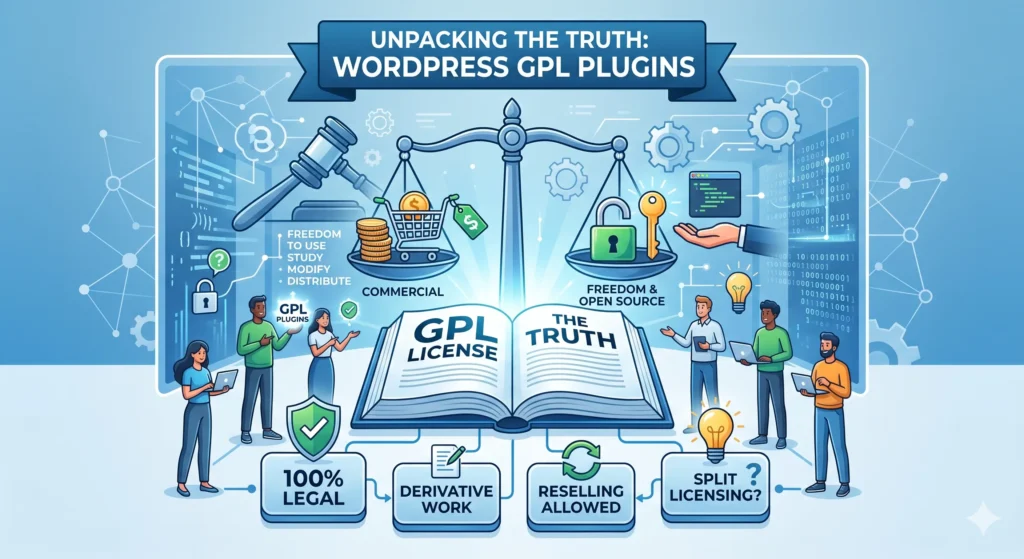
At its core, the GNU General Public License (GPL) is a free, copyleft license developed by the Free Software Foundation (FSF). Its primary aim is to ensure that software remains free for users to run, study, share, and modify. This means that any software released under the GPL grants recipients these freedoms. The “copyleft” aspect is particularly important; it dictates that any derivative works of GPL-licensed software must also be distributed under the same GPL license. This creates a perpetual cycle of freedom for the software’s users.
WordPress itself is licensed under the GPLv2 or any later version published by the FSF. This open-source foundation is what allows the platform to thrive, with a massive community contributing to its development and a vast marketplace of themes and plugins. Consequently, most plugins and themes developed for WordPress are also released under the GPL or a compatible license. This is a key reason why the term “GPL plugins” is so prevalent in the WordPress community.
Key Principles of the GPL
- Freedom to Use: You can run the software for any purpose.
- Freedom to Study: You can examine how the software works and adapt it to your needs. Access to the source code is a prerequisite for this.
- Freedom to Share: You can redistribute copies of the software to help others.
- Freedom to Modify: You can improve the software and release your modifications to the public, so the whole community benefits. Again, access to the source code is essential.
When a plugin or theme developer releases their product under the GPL, they are essentially granting these freedoms to everyone who uses it. This is a fundamental aspect of the open-source philosophy that underpins WordPress. Therefore, obtaining and using GPL-licensed WordPress plugins is not only legal but also aligns with the core principles of the WordPress ecosystem.
The Distinction Between GPL and “Nulled” Plugins
This is where much of the confusion surrounding “GPL plugins” arises. While using GPL-licensed software is legal, the methods some people use to obtain it and the practices associated with “nulled” plugins are not. It’s crucial to differentiate between the legitimate distribution of GPL-licensed software and the illicit sharing of premium, proprietary software.
GPL Plugins (Legitimate): These are plugins and themes released by their developers under the terms of the GNU General Public License. This means they are legally distributed, and users are free to use, modify, and redistribute them according to the GPL’s terms. Many developers openly offer their plugins under GPL, and this is a common and accepted practice within the WordPress community. Websites that offer GPL-licensed plugins often do so because they have purchased them and are redistributing them under the terms of the license. This is a grey area for some, as it can impact the original developer’s revenue, but it is generally considered legal as long as the redistribution adheres strictly to GPL terms. For example, some users might purchase a plugin and then share it with friends or colleagues who are also using WordPress, which is permissible under the GPL.
“Nulled” Plugins: These are premium, proprietary plugins and themes that have had their licensing or activation mechanisms removed or bypassed. The authors of these plugins typically do not release them under the GPL. Instead, they sell them under restrictive commercial licenses. “Nulled” plugins are essentially pirated software. They are distributed without the original developers’ permission, and their redistribution violates copyright laws.
Why “Nulled” Plugins Are Problematic
- Legality and Ethics: Distributing and using “nulled” plugins is illegal. It’s akin to downloading copyrighted movies or music without paying. It infringes on the intellectual property rights of the original developers who invested time, effort, and resources into creating the product. This practice deprives developers of revenue, hindering their ability to provide updates, support, and further development.
- Security Risks: This is perhaps the most significant practical danger. “Nulled” plugins are often bundled with malicious code, such as backdoors, malware, viruses, and spyware. Hackers modify these plugins to inject harmful scripts that can compromise your website, steal sensitive data (like user information or financial details), redirect your visitors to malicious sites, or use your server for spamming. Because the source code has been tampered with, you have no guarantee of its integrity.
- Lack of Updates and Support: When you use a “nulled” plugin, you will not receive official updates from the developer. This means you won’t benefit from bug fixes, security patches, or new features. Furthermore, you won’t have access to customer support, leaving you stranded if you encounter issues. Websites that offer “nulled” plugins rarely provide any support themselves.
- Instability and Compatibility Issues: “Nulled” plugins may be outdated or modified in ways that cause conflicts with other plugins, themes, or even the WordPress core. This can lead to broken functionality, website errors, and a generally unstable user experience.
Understanding the difference between GPL and nulled WordPress plugins is paramount. While GPL encourages sharing and modification, it does not grant a license for commercial software to be stripped of its licensing and distributed as pirated goods.
GPL Clubs and Their Role
The concept of “GPL clubs” or “GPL websites” has emerged as a popular way for users to access a wide range of premium WordPress plugins and themes, often at a fraction of the original cost. These services typically operate by purchasing premium themes and plugins and then redistributing them to their members under the terms of the GPL.
How GPL Clubs Generally Work
- Membership Model: Users pay a subscription fee to access a library of premium themes and plugins.
- Redistribution: The GPL club downloads these premium products and makes them available for members to download.
- GPL Compliance: Proponents argue that since WordPress, and most plugins/themes, are GPL-licensed, this redistribution is legal. They claim they are merely exercising their right to share GPL-licensed software.
The Nuances and Controversies
While the legality of distributing GPL-licensed software is generally accepted, the business model of GPL clubs is often controversial and raises ethical questions.
- Impact on Developers: Many premium plugin and theme developers rely on direct sales and ongoing subscriptions for revenue. This revenue funds their development efforts, customer support, and business operations. GPL clubs, by offering these products at a significantly lower price, can drastically reduce the income of original developers. This can stifle innovation and the availability of high-quality products in the long run.
- Support and Updates: When you download a plugin from a GPL club, you are not purchasing it directly from the original developer. Consequently, you typically do not receive direct support or automatic updates from the developer. GPL clubs might offer their own support, but it’s often limited and cannot replace the in-depth knowledge of the original creators. Furthermore, updates from GPL clubs might be delayed, meaning you might not get the latest security patches or features promptly.
- Terms of Service: Some developers explicitly state in their terms of service that their products are intended for single-site use or require a valid license for updates and support. While the GPL allows redistribution, the method of distribution and the intent behind certain licensing terms can create a grey area. However, legally, if a product is released under the GPL, its license terms cannot override the GPL’s freedoms.
Are GPL Clubs Legal?
From a strict legal standpoint, if a plugin or theme is genuinely released under the GPL, then distributing it under the GPL’s terms is legal. This means that GPL clubs can legally offer GPL-licensed software. The crucial distinction lies in ensuring that the software they offer is actually GPL-licensed and not “nulled” or pirated proprietary software. Many reputable GPL clubs claim to adhere to this principle.
However, the ethical implications remain. Many developers feel that GPL clubs undermine their business models. It’s also important to consider that you might miss out on crucial support and timely updates, which are often vital for maintaining a secure and functional website. If you choose to use a GPL club, it’s wise to research the specific club’s reputation and understand the potential limitations regarding support and updates. For those seeking guaranteed support and direct developer access, purchasing directly from the developer or authorized resellers remains the most reliable option. Exploring the premium WordPress themes plugins for free: what is a WordPress GPL club, are they legit? can provide further insights into this complex topic.
The Importance of Official Sources and Developer Support
While the GPL license permits redistribution, relying solely on GPL clubs or third-party sites for your plugins and themes can carry risks. The most secure and reliable way to obtain WordPress plugins and themes is directly from the official WordPress Plugin Directory, the WordPress Theme Directory, or from the official websites of the developers themselves.
Benefits of Purchasing Directly from Developers or Official Repositories
- Guaranteed Authenticity and Security: When you download from official sources, you can be confident that the code is clean, free from malware, and has undergone some level of review (especially for the official directories). Developers are incentivized to maintain high security standards for their products.
- Direct Access to Updates: You will receive automatic updates directly from the developers. This is crucial for security patches, bug fixes, and new features. Keeping your plugins and themes updated is a cornerstone of website maintenance and security.
- Dedicated Support: Purchasing directly usually grants you access to the developer’s customer support channels. This means you can get expert help when you encounter problems, customize functionalities, or need clarification on how to use the product effectively.
- Supporting Developers: Buying directly ensures that the developers receive the full revenue from their work. This allows them to continue investing in their products, providing ongoing improvements, and supporting the WordPress ecosystem.
- Licensing Compliance: You receive a legitimate license that grants you the right to use the premium features, receive updates, and access support as per the developer’s terms.
When GPL Redistribution is Acceptable
If you obtain a plugin or theme that is genuinely GPL-licensed, and you decide to redistribute it, you must adhere strictly to the GPL’s terms. This means:
- You must ensure the software remains under the GPL.
- You must provide access to the source code.
- You cannot impose additional restrictions on the recipients’ freedom to use, study, share, or modify the software.
Many users who purchase premium plugins might share them with a fellow developer or a friend who also runs a WordPress site. This is generally considered acceptable under the GPL, provided no additional restrictions are placed on the recipient and the core freedoms are maintained. However, creating a business model around this redistribution, as GPL clubs do, is where the ethical debates intensify.
Exploring Legitimate Alternatives to High-Cost Plugins
While the allure of free or heavily discounted premium plugins is strong, especially for budget-conscious individuals or small businesses, it’s important to consider the long-term implications. Instead of resorting to potentially risky methods, explore legitimate alternatives:
- Free Versions of Premium Plugins: Many popular premium plugins offer robust free versions that might be sufficient for your needs. For example, many form builders have excellent free tiers. You can explore options like Wpforms Vs Gravity Forms Which WordPress Form Builder Is Better In 2025 to compare functionalities.
- Open-Source Alternatives: The WordPress ecosystem is rich with high-quality open-source plugins that are completely free and GPL-licensed. These are often developed by dedicated communities and offer excellent functionality.
- Bundles and Sales: Keep an eye out for official sales events or plugin bundles offered by developers or marketplaces. These can provide significant discounts on premium products without compromising on legitimacy or support.
- GPL Clubs (with caution): As discussed, if you choose to use a GPL club, do so with awareness of the potential limitations regarding support and updates. Ensure the club is reputable and clearly states they only distribute GPL-licensed software.
- Prioritize Essential Plugins: Instead of trying to acquire every premium plugin, focus on the ones that are truly essential for your website’s functionality and goals. Investing in a few high-quality, officially supported plugins is often more cost-effective in the long run than dealing with the potential issues of free or “nulled” alternatives.
Remember that investing in quality tools for your website is an investment in its success. This includes reliable plugins for SEO, performance, security, and user experience. For instance, optimizing your website’s speed is crucial, and tools like Wp Rocket 3 15 9 WordPress Speed Optimization are worth considering. Similarly, efficient image optimization can make a significant difference, which is where plugins like Imagify Pro Optimize Images Convert Webp WordPress come into play.
The Legalities of WordPress GPL Plugins Summarized
To recap, the core question “Are WordPress GPL plugins legal?” can be answered with a nuanced “yes, but with important distinctions.”
- GPL-licensed plugins and themes are legal to use, distribute, and modify. This is the foundation of the WordPress ecosystem.
- Redistributing GPL-licensed software is permitted under the terms of the license.
- “Nulled” plugins, however, are illegal. These are pirated premium products stripped of their licensing mechanisms and often contain malware. Using them poses significant security risks and infringes on copyright.
- GPL clubs operate in a legal grey area. If they exclusively distribute truly GPL-licensed software, their activities can be considered legal. However, they often face criticism for undermining developers’ business models and may offer limited support and delayed updates.
- The safest and most ethical approach is to obtain plugins and themes directly from official sources or developers. This ensures authenticity, security, access to updates, and dedicated support, while also directly supporting the creators.
Ultimately, making informed choices about the software that powers your website is crucial. Prioritizing legality, security, and ethical practices will contribute to a more stable, trustworthy, and successful online presence. Understanding the nuances of licensing, especially with open-source software like WordPress, empowers you to navigate the digital landscape responsibly. For comprehensive SEO management, consider exploring powerful tools like Rank Math Pro Review 2025 Is It The Best Seo Plugin For WordPress.
Conclusion: Navigating the GPL Landscape with Confidence
The legality of WordPress GPL plugins hinges on a clear understanding of the GNU General Public License and the distinction between legitimate GPL distribution and software piracy. WordPress itself, along with the vast majority of its themes and plugins, operates under the GPL, fostering an environment of freedom, collaboration, and innovation. This means that using GPL-licensed plugins is not only legal but encouraged within the WordPress community.
However, the lines blur when practices like “nulled” plugins and certain GPL club models emerge. “Nulled” plugins are essentially pirated software, illegal to distribute and use, and fraught with security risks. While some GPL clubs operate within the technical letter of the GPL by redistributing genuinely GPL-licensed software, their business models often raise ethical concerns regarding their impact on original developers. They can also lead to a lack of direct support and delayed updates.
Therefore, while GPL plugins are indeed legal, the source from which you obtain them and the method of acquisition are critical. For optimal security, reliability, and to support the ongoing development of the WordPress ecosystem, the most recommended path is always to acquire plugins and themes directly from their official developers or authorized marketplaces. This ensures you receive authentic, secure software, along with crucial updates and dedicated support. By making informed decisions, you can confidently leverage the power of WordPress plugins while maintaining the integrity and security of your website. Remember that investing in quality and legitimacy is key to long-term online success.
GPL vs Nulled WordPress Files
A simple comparison for users who want affordable WordPress tools without risking their website.
GPL-Distributed Files
- Shared under GPL-friendly redistribution principles.
- Useful for testing, learning, staging, and budget-friendly builds.
- Cleaner alternative compared with random nulled downloads.
- Transparent when official vendor support is not included.
Nulled Files
- Often cracked, modified, or redistributed without transparency.
- Can include malware, hidden redirects, and backdoors.
- May damage SEO rankings, site reputation, and customer trust.
- Hard to verify and unsafe for serious WordPress projects.
Explore GPL WordPress plugins, themes, templates, and WooCommerce tools.
Get affordable WordPress resources for design, SEO, performance, forms, automation, WooCommerce, and more.
Quick FAQs
Short answers for common WordPress GPL and safety questions.
Are WordPress GPL plugins legal?
WordPress GPL plugins can be legally redistributed when they are distributed under GPL license terms. The important part is to avoid misleading official license claims and unsafe nulled files.
What is the difference between GPL and nulled plugins?
GPL-distributed plugins are shared under open-source license terms. Nulled plugins are usually cracked, modified, or redistributed without transparency.
Do GPL products include official developer support?
GPL-distributed products usually do not include official vendor support, official account access, or vendor license keys unless clearly stated.

Qamar
WPPlugShop publishes practical WordPress guides focused on GPL awareness, site performance, affordable tools, WooCommerce, SEO, analytics, and safer website building.
Related WordPress Guides
More practical resources to help you build smarter, safer, and faster with WordPress.