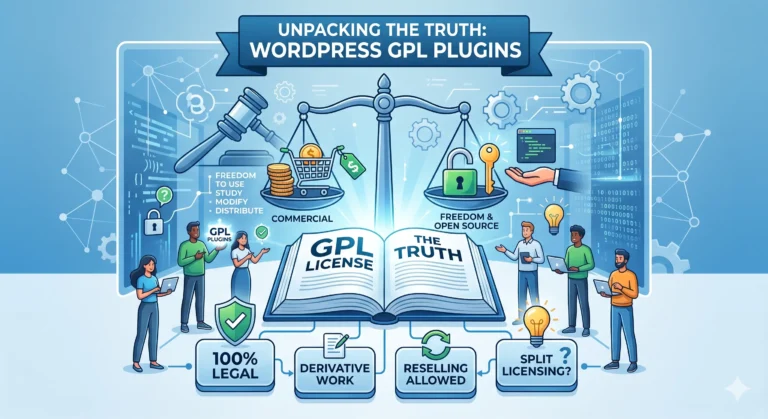
5 Essential Facts: Premium WordPress Themes & Plugins (GP…
Premium WordPress Themes & Plugins for Free: What is a WordPress GPL Club? Are They Legit? In the dynamic world of website creation, WordPress stands as a titan, powering over...

WPPlugShop focuses on GPL-distributed WordPress resources. Products may not include official developer support, official vendor license keys, automatic vendor updates, or vendor account access unless clearly stated. Avoid nulled files because they can create security, malware, and SEO risks.
GPL is not the same as nulled — and that difference matters.
GPL distribution is about open-source licensing. Nulled files are usually cracked or modified copies that can harm your website. This guide helps users understand the safe, legal, and practical difference.
Premium WordPress Themes & Plugins for Free: What is a WordPress GPL Club? Are They Legit?
The allure of premium WordPress themes and plugins is undeniable. They offer advanced features, professional designs, and enhanced functionality that can elevate a website from amateur to exceptional. For a small business owner, a blogger, or a developer managing multiple client sites, the cost of individual premium licenses can quickly add up. This is where the promise of GPL clubs—often found on various online marketplaces and forums—becomes incredibly attractive. They typically operate on a subscription model, offering access to a large repository of premium WordPress themes and plugins for a low annual or lifetime fee. The core argument for their legitimacy often hinges on the GNU General Public License (GPL), which WordPress itself and many of its themes and plugins are released under.
Understanding the GNU General Public License (GPL)
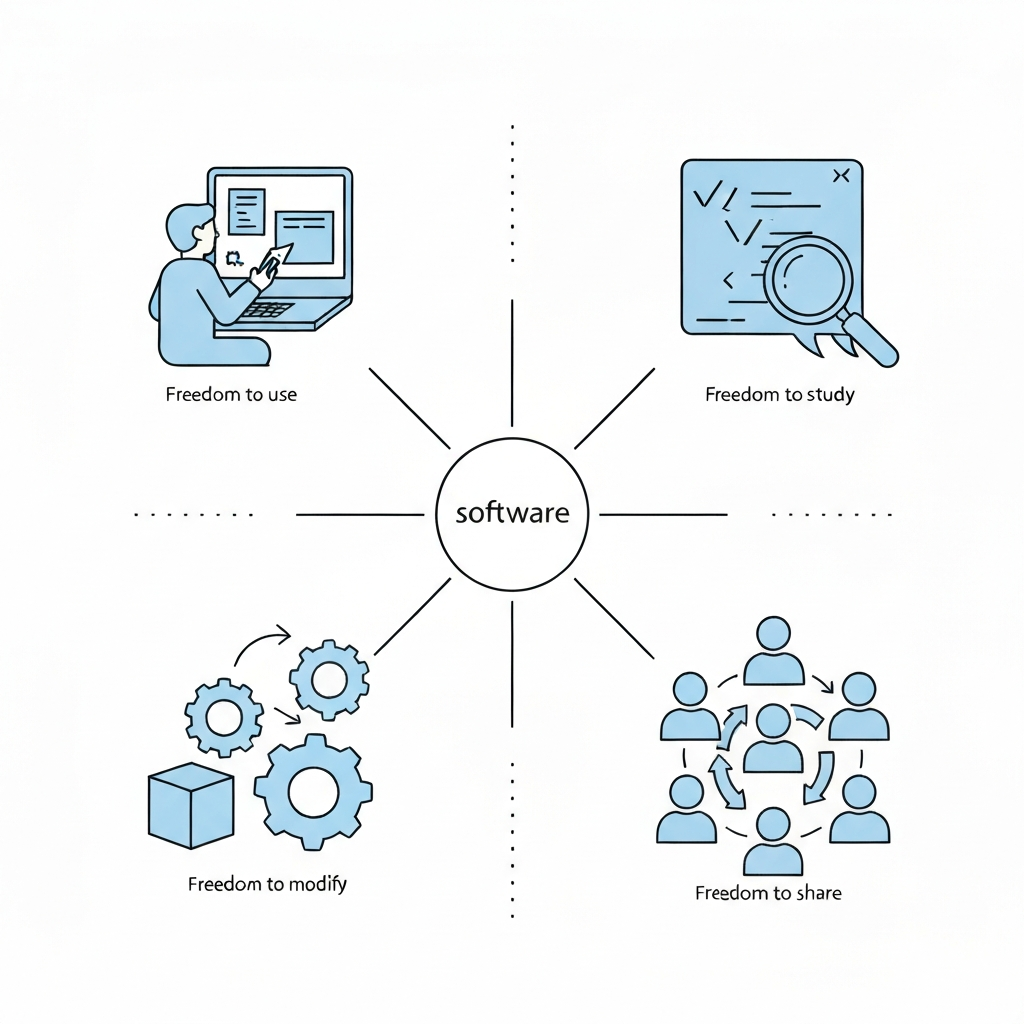
To understand the legitimacy of GPL clubs, it’s crucial to first grasp what the GPL actually is. The GNU General Public License is a widely used free software license that guarantees end users the freedom to run, study, share, and modify software. Created by Richard Stallman of the Free Software Foundation, the GPL is a copyleft license, meaning that any derivative works of GPL-licensed software must also be released under the same license.
Key aspects of the GPL include:
- Freedom to Use: You can use GPL-licensed software for any purpose, personal or commercial.
- Freedom to Study: You can access and study the source code of the software to understand how it works.
- Freedom to Modify: You can modify the software to suit your needs.
- Freedom to Share: You can distribute copies of the software, either original or modified, to others.
Crucially, the GPL does not grant you the right to proprietary support, branding, or certain bundled services that a premium theme or plugin developer might offer. When you purchase a premium theme or plugin directly from a developer, you’re not just buying the code; you’re often buying access to their support, regular updates, and exclusive features that may be tied to their proprietary licensing mechanisms.
How WordPress GPL Clubs Operate
GPL clubs leverage the “freedom to share” aspect of the GPL. They acquire premium WordPress themes and plugins that are licensed under the GPL. Because the GPL allows for the redistribution of the software, these clubs then bundle these assets together and offer them to their subscribers. The business model typically involves a low subscription fee, which allows the club to maintain the website, acquire new themes and plugins, and provide access to their curated library.
The primary appeal is the sheer volume of premium software available for a single, low price. Instead of paying hundreds or even thousands of dollars for individual licenses, users can access hundreds or thousands of themes and plugins for a fraction of that cost. This can be particularly appealing for:
- Web Developers: Managing multiple client websites can become very expensive if each requires premium themes and plugins. GPL clubs offer a cost-effective solution.
- Budget-Conscious Users: Individuals or small businesses with limited budgets can access professional-grade tools without breaking the bank.
- Testing and Exploration: Users might want to experiment with various premium features before committing to a full purchase, and GPL clubs provide a low-risk way to do so.
The Question of Legitimacy: Where Things Get Murky
The concept of GPL clubs can be legitimate, provided they adhere strictly to the terms of the GPL. If a theme or plugin is genuinely licensed under the GPL, then distributing it is permitted. However, the “legitimacy” often comes into question due to several factors:
1. Nulled vs. GPL
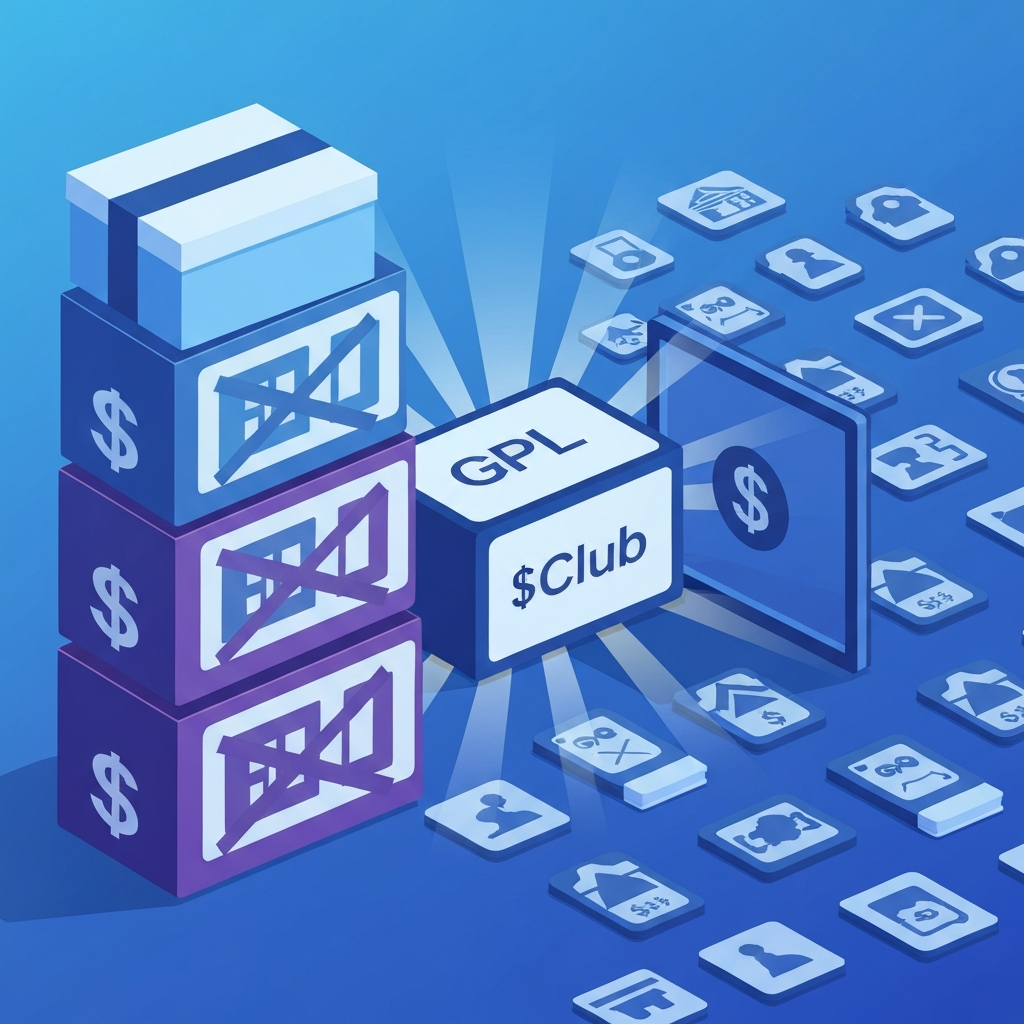
This is perhaps the most significant point of confusion. Many websites offering “free premium themes and plugins” are actually distributing nulled software, not GPL-licensed software. Nulled software is essentially pirated software. It has had its licensing or activation mechanisms removed or bypassed, allowing it to be used without a valid purchase.
- GPL Club: Acquires GPL-licensed software, repackages it, and offers it under a subscription. The core functionality remains intact, but proprietary support and updates directly from the original developer are usually absent.
- Nulled Software: Illegally modified software with licensing checks removed. This is piracy.
The distinction is critical. While distributing GPL-licensed software is legal, distributing nulled software is not. Many sites that claim to offer free premium items are actually distributing nulled versions, which poses significant risks.
2. Support and Updates
When you purchase a premium theme or plugin directly from its developer, you typically get access to official support channels and regular updates. These updates are crucial for security, compatibility with new WordPress versions, and the introduction of new features.
GPL clubs, by their nature, usually cannot provide direct support from the original developers. Their support is often limited to helping you download the files or general WordPress troubleshooting. Furthermore, the updates you receive from a GPL club might be delayed or even non-existent. The club has to wait for the original developer to release an update, then acquire it, repackage it, and make it available to their subscribers. This can leave your website vulnerable if critical security patches are missed.
3. Security Risks
Using nulled themes and plugins is extremely dangerous. Hackers frequently embed malicious code, backdoors, malware, and tracking scripts into nulled software. These can compromise your website, steal sensitive data (like user credentials or payment information), redirect your visitors to malicious sites, or even use your server for spamming or launching attacks. Even if a GPL club claims to only distribute GPL-licensed software, the risk of them unknowingly or knowingly distributing compromised files is higher than purchasing directly from a reputable developer.
4. Ethical Considerations and Developer Support
While the GPL allows for redistribution, it’s important to consider the impact on the developers who create these themes and plugins. They invest significant time, effort, and expertise into building high-quality products. When their software is distributed through GPL clubs or pirated, they lose revenue that would otherwise fund further development, support, and innovation. Supporting developers directly ensures the continued improvement of the WordPress ecosystem.
5. Bundled Services and Proprietary Add-ons
Some premium themes and plugins come with proprietary add-ons or services that are not strictly part of the GPL code. For example, a theme might include a custom page builder that has its own licensing restrictions, or a plugin might rely on an external API that requires a paid subscription. GPL clubs may not be able to provide access to these proprietary elements, or they might be distributed in a way that violates their terms.
Identifying a “Legitimate” GPL Club (with Caveats)
If you choose to explore GPL clubs, understanding what to look for can help mitigate risks, though no method is foolproof:
- Transparency: Reputable GPL clubs are usually transparent about their sourcing. They should clearly state that they are distributing GPL-licensed software.
- Focus on GPL Compliance: They should emphasize that they are not distributing pirated or nulled software.
- Disclaimer on Support and Updates: They should be upfront about the fact that you won’t receive direct support from the original developers and that updates might be delayed or unavailable.
- Community and Reviews: Look for established GPL clubs with positive community feedback and reviews. However, be wary, as many fake reviews exist.
- Price: If a deal seems too good to be true (e.g., lifetime access to thousands of premium items for $10), it almost certainly is. Legitimate GPL clubs will have a reasonable subscription fee.
Dangers of Using Nulled Themes and Plugins
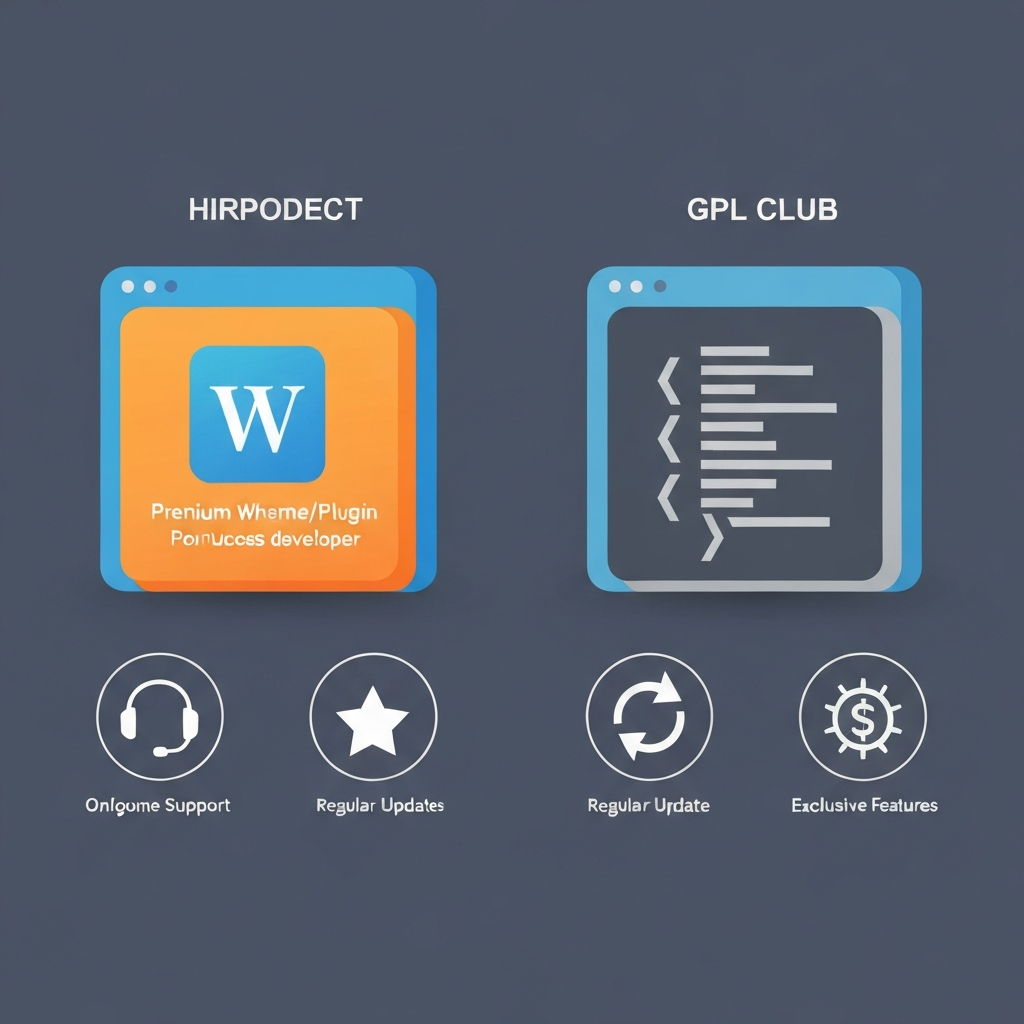
The allure of “free premium” is strong, but the risks associated with nulled software are severe and far outweigh any perceived savings:
- Security Vulnerabilities: As mentioned, nulled files are a prime vector for malware, viruses, and backdoors. These can compromise your entire website and potentially your hosting environment.
- Lack of Updates: You will not receive official updates. This means missing out on security patches, bug fixes, and compatibility updates for new WordPress versions, leaving your site perpetually vulnerable.
- No Support: You have no recourse to the original developers for help. If something breaks, you’re on your own or relying on potentially unreliable community forums.
- Ethical and Legal Issues: Distributing and using nulled software is illegal and unethical, harming the developers who create the tools you’re using.
- Poor Performance: Nulled themes and plugins may be poorly coded or contain unnecessary bloat, negatively impacting your site’s speed and performance. Optimizing images with a tool like Imagify Pro Optimize Images Convert Webp WordPress becomes less effective if the underlying theme or plugin is inefficient.
- SEO Penalties: Malicious code in nulled software can lead to your site being flagged by search engines for spam or malware, resulting in de-indexing and significant traffic loss.
Alternatives to GPL Clubs and Nulled Software
Given the risks, it’s wise to explore legitimate alternatives:
1. Purchase Directly from Developers
This is the most secure and ethical approach. While more expensive upfront, you gain:
- Official support and documentation.
- Regular, timely updates.
- Direct contribution to the developers’ work.
- Peace of mind knowing you have legitimate, secure software.
2. Use Reputable GPL-Licensed Themes and Plugins
Many excellent themes and plugins are released under the GPL and are available for free on the official WordPress.org repository. While they might not have all the bells and whistles of their premium counterparts, they are often robust and well-supported. For example, using a well-regarded free form builder like WPForms Lite is a great starting point before considering premium options like Wpforms Vs Gravity Forms Which WordPress Form Builder Is Better In 2025.
3. Look for Sales and Discounts
Premium theme and plugin developers often have sales events (e.g., Black Friday, holiday sales) where you can purchase licenses at a significant discount. Subscribing to developer newsletters can keep you informed about these opportunities.
4. Consider Bundles and Membership Sites from Developers
Some reputable developers offer their own membership sites or bundles that provide access to multiple plugins or themes at a reduced cost compared to individual purchases. These are still legitimate because you are purchasing directly from the source.
5. Explore Open-Source Alternatives
Many open-source projects offer powerful functionality. While they might require more technical expertise, they are inherently free and community-supported.
6. Utilize Free Versions of Premium Plugins
Many premium plugins offer a free version with core functionality. For instance, while Gravity Forms Plugin WordPress is a premium powerhouse, there are free form builders available. Similarly, SEO plugins like Rank Math offer a robust free version before you even consider a premium upgrade like the one reviewed in Rank Math Pro Review 2025 Is It The Best Seo Plugin For WordPress.
7. Focus on Essential Plugins
Instead of loading your site with dozens of plugins, focus on the ones you truly need. This reduces costs and potential conflicts. You can find curated lists of essential tools, such as the Best WordPress Plugins 2026 guide, to help you make informed choices.
The “Legitimacy” of GPL Clubs: A Nuanced View
Can a GPL club be “legitimate” in the sense that they are distributing software under the terms of the GPL? Yes, technically, if they are only distributing software that is fully GPL-licensed and are not distributing pirated or nulled versions. However, this technical legitimacy often masks significant practical drawbacks and risks:
- Absence of Direct Support: You lose the crucial support from the original authors.
- Delayed/No Updates: This is a major security and functionality concern. Without timely updates, your site can become vulnerable to exploits or incompatible with newer WordPress versions.
- Potential for Compromised Files: Even if a club intends to be legitimate, the sourcing and vetting process can be flawed, leading to the distribution of malicious files. The line between a “GPL club” and a “nulled software distributor” can be very thin and easily crossed, intentionally or unintentionally.
- Ethical Concerns: It undermines the business model of developers who rely on license sales to maintain and improve their products.
The core issue is that while the code might be GPL, the value proposition of premium software often includes ongoing development, support, and security assurance, which GPL clubs cannot reliably provide. Therefore, while a GPL club might not be strictly illegal if it adheres to GPL terms, it is rarely a wise or safe long-term solution for building a reliable website.
It’s important to differentiate between acquiring GPL-licensed software for personal use and building a professional or business website. For personal projects where risk tolerance is high, a GPL club might seem like a viable option. However, for any site where security, performance, and reliability are paramount, direct purchases or verified legitimate sources are the only sensible path.
Consider the difference between obtaining a free copy of an open-source operating system like Linux (which is GPL) and obtaining a “free” copy of proprietary software that has had its license protection removed. The former is the intended use of the license; the latter is piracy. GPL clubs often operate in a grey area, and the risk of falling into the “piracy” category, either by the club’s actions or the user’s perception, is substantial.
The WordPress Ecosystem and GPL
The WordPress ecosystem thrives on the GPL. Many developers build their businesses by creating premium add-ons and themes that are themselves GPL-licensed. This allows for customization and interoperability. However, the business model relies on users purchasing licenses, which often grant access to premium support, updates, and sometimes additional features or services not strictly tied to the code’s GPL status.
When you purchase a premium product, you are not just buying the code; you are buying into the developer’s ecosystem. This includes:
- Ongoing Development: Funds from sales go back into improving the product.
- Security Patches: Developers are motivated to fix vulnerabilities quickly.
- Compatibility Updates: Ensuring the product works with the latest WordPress versions and popular plugins.
- Customer Support: Assistance when you encounter issues.
GPL clubs bypass this direct relationship, often leading to a fragmented and potentially insecure experience. For example, if you are using a premium theme and encounter a bug, you would typically contact the theme developer. If you acquired the theme from a GPL club, that direct line of communication is severed. You might get generic advice, but not the specific, expert help you need. This can be particularly frustrating when dealing with complex issues or when trying to ensure your site runs smoothly, much like when trying to achieve optimal performance without proper tools like Wp Rocket 3 15 9 WordPress Speed Optimization.
Conclusion: Proceed with Extreme Caution
The promise of premium WordPress themes and plugins for free through GPL clubs is tempting, but the reality is fraught with risks. While the underlying software may be distributed under the GPL, the way GPL clubs operate often blurs the lines between legitimate redistribution and piracy. The potential for security breaches, lack of crucial updates, absence of developer support, and ethical implications make them a questionable choice for most users, especially those managing business or critical websites.
While some GPL clubs might technically adhere to the GPL, the inherent risks associated with delayed updates, potential malware, and the lack of direct support from developers are significant drawbacks. It is almost always a safer, more ethical, and ultimately more beneficial decision to purchase premium themes and plugins directly from reputable developers or through official channels. Investing in legitimate software ensures you receive the security, support, and ongoing development necessary to build and maintain a successful, reliable website. Understanding the Difference Between GPL and Nulled WordPress Plugins is the first step in making an informed decision that protects your online presence. Ultimately, the long-term health and security of your website are worth more than the short-term savings offered by questionable GPL club subscriptions. For those serious about their online presence, investing in legitimate tools is a non-negotiable aspect of professional web development, crucial for everything from user engagement to site speed, which is a core component of How To Speed Up WordPress.
GPL vs Nulled WordPress Files
A simple comparison for users who want affordable WordPress tools without risking their website.
GPL-Distributed Files
- Shared under GPL-friendly redistribution principles.
- Useful for testing, learning, staging, and budget-friendly builds.
- Cleaner alternative compared with random nulled downloads.
- Transparent when official vendor support is not included.
Nulled Files
- Often cracked, modified, or redistributed without transparency.
- Can include malware, hidden redirects, and backdoors.
- May damage SEO rankings, site reputation, and customer trust.
- Hard to verify and unsafe for serious WordPress projects.
Explore GPL WordPress plugins, themes, templates, and WooCommerce tools.
Get affordable WordPress resources for design, SEO, performance, forms, automation, WooCommerce, and more.
Quick FAQs
Short answers for common WordPress GPL and safety questions.
Are WordPress GPL plugins legal?
WordPress GPL plugins can be legally redistributed when they are distributed under GPL license terms. The important part is to avoid misleading official license claims and unsafe nulled files.
What is the difference between GPL and nulled plugins?
GPL-distributed plugins are shared under open-source license terms. Nulled plugins are usually cracked, modified, or redistributed without transparency.
Do GPL products include official developer support?
GPL-distributed products usually do not include official vendor support, official account access, or vendor license keys unless clearly stated.

Qamar
WPPlugShop publishes practical WordPress guides focused on GPL awareness, site performance, affordable tools, WooCommerce, SEO, analytics, and safer website building.
Related WordPress Guides
More practical resources to help you build smarter, safer, and faster with WordPress.